23 October: the history of the 1956 Hungarian Revolution and the 1989 Republic
The students' 16 points, the Bem statue, the Radio, the Corvin Passage, 4 November, about 200,000 refugees, the reprisals, then 1989: reburial and a republic. The story of a national holiday, with sources.
23 October is one of Hungary's national holidays, and it marks two events at once. On this day in 1956 the Hungarian Revolution and War of Independence began. On the same day in 1989 the Hungarian Republic was proclaimed. 2026 is the 70th anniversary of the revolution. Below: what happened, what the sources say, and how the day is marked. Every number links to a source; where sources disagree, we give a range.
In brief
| Question | Answer |
|---|---|
| When did it start? | Tuesday, 23 October 1956, Budapest |
| Who started it? | A student demonstration that crowds joined |
| How long did it last? | The Soviet intervention began on 4 November; armed resistance went on for days |
| How many died? | About 2,500–3,000 on the Hungarian side, about 700 on the Soviet side (Wikipedia) |
| How many fled? | About 200,000 (UNHCR) |
| Why a holiday today? | Act XXVIII of 1990 made it a national holiday |
Background: 1945–1956
After 1945 Hungary came under Soviet control. From 1948 a Stalinist dictatorship was built under Mátyás Rákosi. The political police (ÁVO, later ÁVH) ran show trials and deportations. According to the Hungarian Wikipedia overview, state security had about 28,000 staff and about 40,000 informers. Forced collectivisation and poor economic policy brought poverty.
Stalin died in 1953. At the request of the new Soviet leadership, Rákosi gave up the premiership, and Imre Nagy took over. This "thaw" brought an amnesty, closed internment camps and lighter burdens on farmers (Wikipedia). In 1955 Rákosi pushed Nagy out, and Nagy lost all his posts (Britannica).
In February 1956, at the 20th Congress of the Soviet Communist Party, Khrushchev attacked the Stalin era. Britannica names the speech as a trigger of the unrest. In Budapest the Petőfi Circle, re-formed in 1954, became a forum for open debate. Rákosi tried to silence it, but on 18 July 1956 he was removed and replaced by Ernő Gerő. In June, Polish workers rose up in Poznań. On 6 October about 200,000 attended the reburial of László Rajk and others executed after a show trial (Wikipedia).
23 October 1956, hour by hour
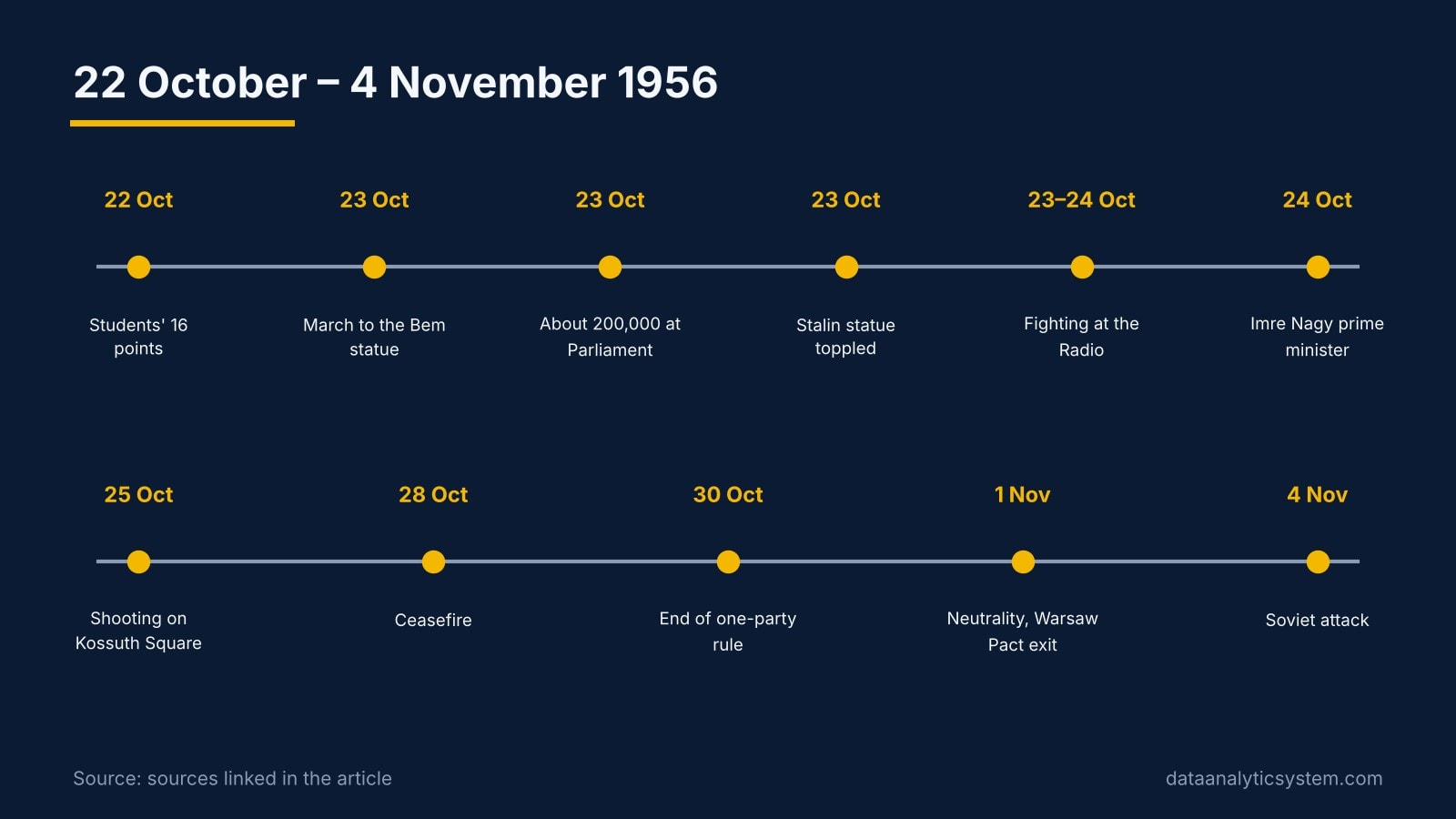
22 October, evening. At a mass meeting, students of the Budapest Technical University adopted the 16 points. Point one demanded the withdrawal of Soviet troops. Others called for a Nagy government, free multi-party elections, a free press and the removal of the Stalin statue. The last point called a march to the Bem statue for 23 October.
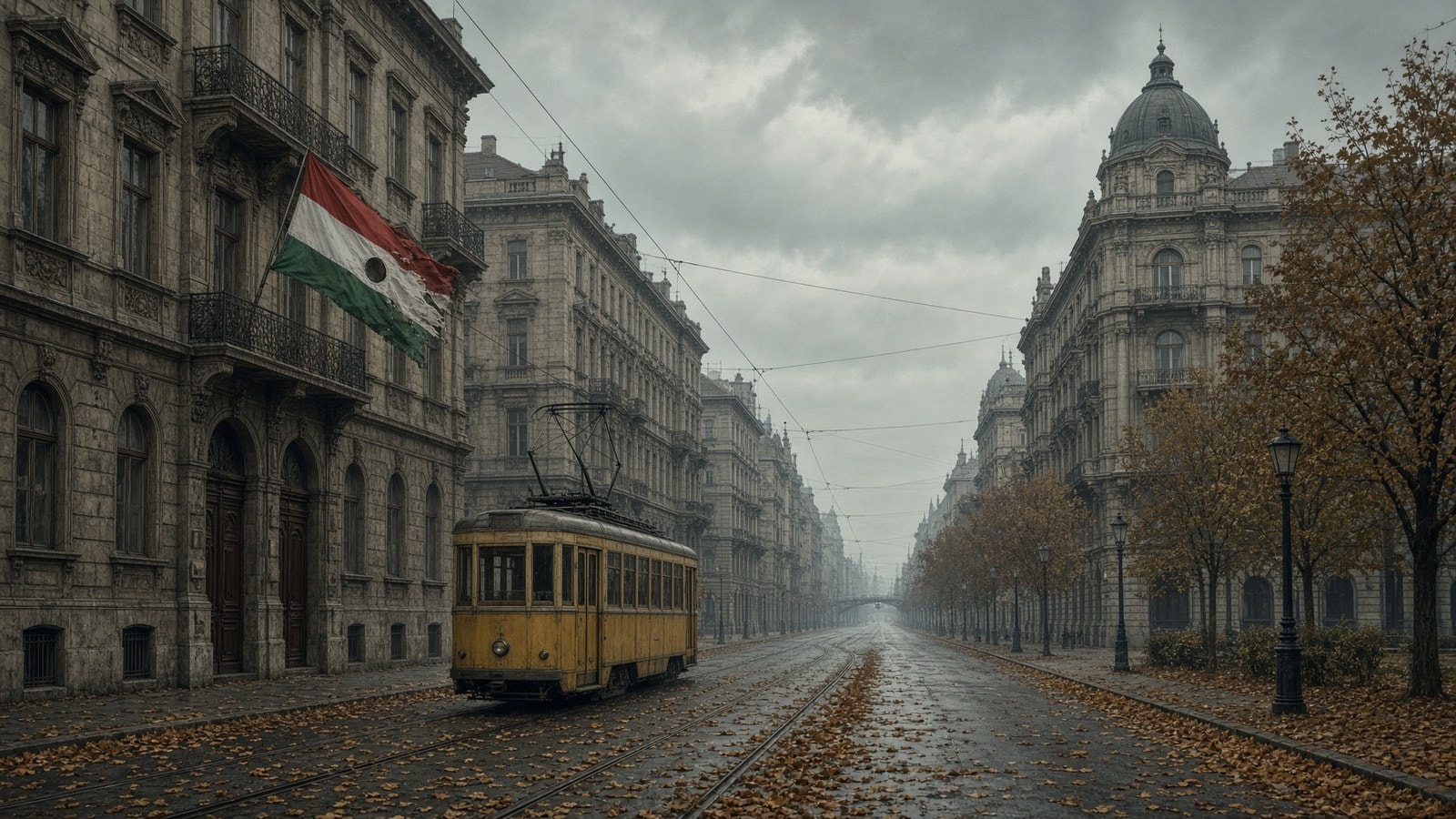
Afternoon: the Bem statue. About 20,000 people gathered, according to Wikipedia. Here someone cut the Rákosi-era coat of arms out of the middle of a flag. Many flags were soon altered the same way, and the flag with a hole became the revolution's symbol (Wikipedia).
Evening: outside Parliament. By 6 p.m. about 200,000 people filled Kossuth Square and the nearby streets. Around 9 p.m. Imre Nagy spoke to the crowd from a window of Parliament (Wikipedia). Gerő's 8 p.m. radio speech had angered the crowds further (Wikipedia).
9:30 p.m.: the Stalin statue. The crowd pulled down the statue, about 8–10 metres tall. Only the boots were left on the plinth (Wikipedia).
Night: the Radio. Part of the crowd went to the radio building on Bródy Sándor Street to get their demands broadcast. ÁVH guards opened fire; the siege lasted from about midnight to about 8 a.m. (Wikipedia). The protest became an armed uprising.
The days that followed: 24 October – 3 November
On 24 October Imre Nagy became prime minister (Wikipedia). Armed groups formed in Budapest; one of the best known fought in the Corvin Passage (Corvin köz) in the heart of the Józsefváros district (Wikipedia).
On 25 October shots were fired into an unarmed crowd on Kossuth Square ("Bloody Thursday"). The toll is disputed: a UN report gave 61 dead, other estimates several hundred, some up to about 1,000 (Hungarian and English Wikipedia).
On 28 October the government announced a ceasefire. It also announced the ÁVH's dissolution and a Soviet pullout from Budapest (Wikipedia). On 30 October Nagy announced the end of the one-party system (Wikipedia). The same day the party headquarters on Republic Square was besieged, with deaths on both sides.
On 1 November the government declared Hungary neutral and announced its withdrawal from the Warsaw Pact (Wikipedia). (The Warsaw Pact was the Soviet-led alliance.)
4 November and after
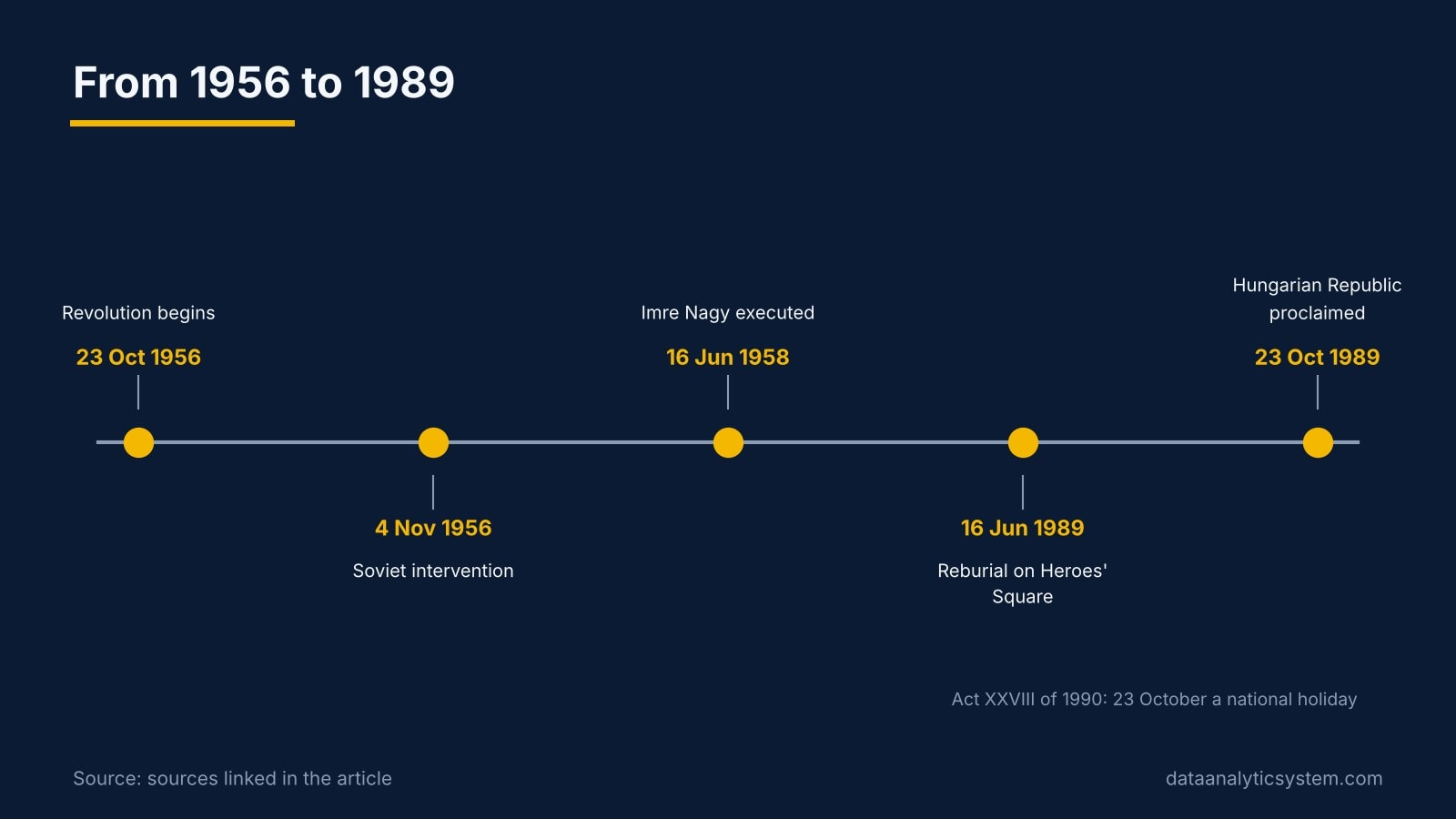
At dawn on 4 November the Soviet army attacked ("Operation Whirlwind"), with 17 divisions in the country (Wikipedia). That morning in Szolnok, János Kádár proclaimed a "Hungarian Revolutionary Worker-Peasant Government". Resistance around the Corvin Passage lasted until 9 November. Soviet forces had prevailed by 10 November, while groups in Csepel and Dunaújváros held out until 11 November (Wikipedia).
Casualty figures come as ranges. Hungarian side: about 2,500–3,000 dead and 13,000–20,000 wounded. Soviet side: about 700 dead (figures between 699 and 722). A summary made public in 1993 lists 2,652 Hungarian and 720 Soviet dead (Hungarian and English Wikipedia).
Refugees: about 200,000 people
According to the UN Refugee Agency (UNHCR), about 200,000 people left Hungary. About 180,000 went to Austria and about 20,000 to Yugoslavia. A lower estimate of about 176,000 also exists (Wikipedia).
UNHCR says about 180,000 were resettled in 37 countries:
| Receiving country | Approx. number received |
|---|---|
| United States | 40,000 |
| Canada | 40,000 |
| United Kingdom | 20,000 |
| West Germany | 15,000 |
| Australia | 15,000 |
Source: UNHCR. Rounded figures.
The reprisals
Trials followed from 1957. A researcher at the Historical Archives of the Hungarian State Security says nearly 40,000 people had been arrested by May 1957. The English Wikipedia summary gives about 26,000 people brought to court, about 22,000 sentenced and about 13,000 interned (held without a court sentence). The most often cited number of executions is about 229. Other estimates go up to about 350.
After a secret trial, Imre Nagy was executed on 16 June 1958 (Britannica). Pál Maléter and Miklós Gimes died with him. In 1961 their bodies were secretly buried under false names in Plot 301 of the New Public Cemetery in Budapest (National Heritage Institute, 2018).
1989: reburial and a republic
On 16 June 1989, the 31st anniversary of the execution, Imre Nagy and his companions were reburied with full honours. BBJ reports that about 250,000 people attended. On Heroes' Square a sixth, empty coffin, for all other victims, stood beside five others. The Supreme Court cleared Nagy that year (Britannica).
On 18 October 1989 Parliament passed a sweeping amendment to the constitution (Act XXXI of 1989). It changed about 100 provisions and took effect on 23 October (Wikipedia). At noon that day, the interim President of the Republic proclaimed the Hungarian Republic from the balcony of Parliament. Tens of thousands stood on Kossuth Square (We Love Budapest).
How it became a national holiday
On 2 May 1990 the first freely elected Parliament passed Act XXVIII of 1990 "on enshrining in law the significance of the October 1956 Revolution and War of Independence". It was promulgated on 8 May. Section 1 says Parliament preserves the memory of the 1956 revolution in law. Section 2 makes 23 October a national holiday, marking both the 1956 uprising and the 1989 Republic. The preamble compares the importance of 1956 only to the 1848–49 revolution.
In employment law, 23 October is a public holiday (a day off). Section 102(1) of the Hungarian Labour Code (Act I of 2012) lists the public holidays, and 23 October is among them (see also the text of a 2013 amending bill).
How the day is marked today
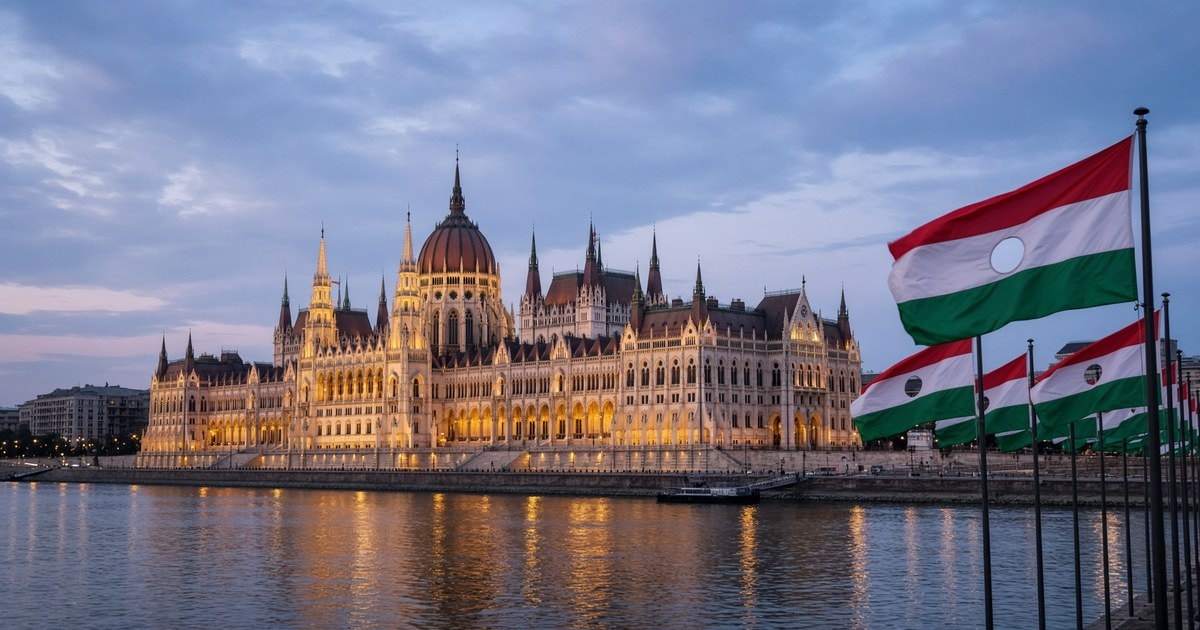
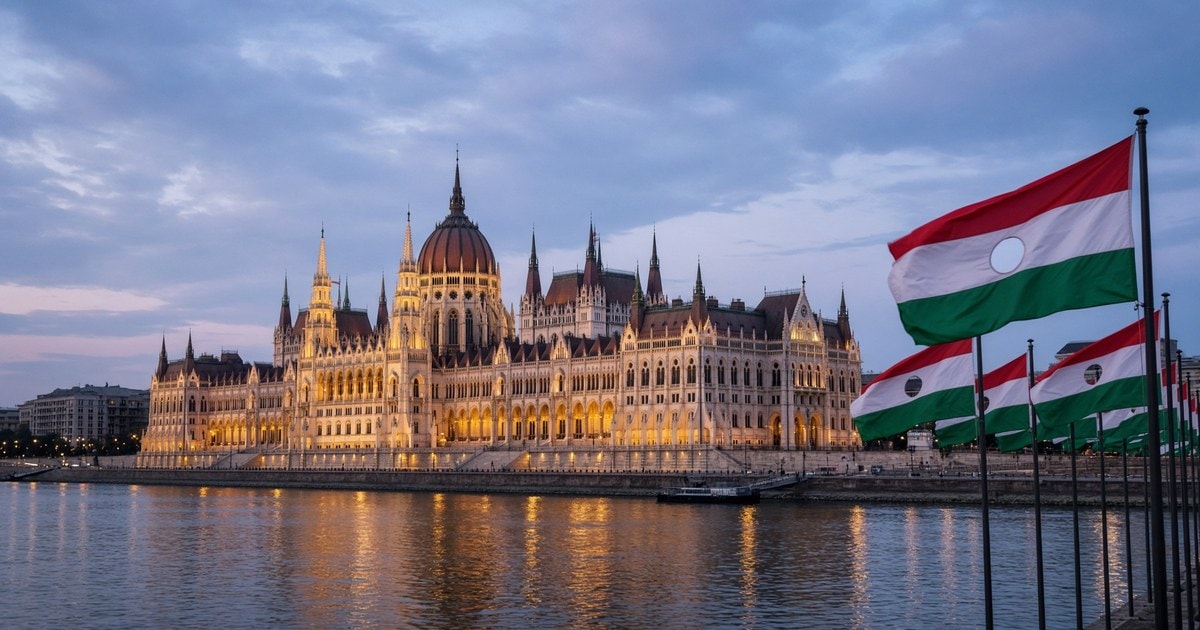
- The flag with a hole. Many fly the flag with its centre cut out, as the 1956 marchers did (Wikipedia).
- Kossuth Square. In the 2012–2014 rebuild, an underground memorial to the 25 October victims was made in a ventilation tunnel (Wikipedia). The National Heritage Institute also describes a symbolic grave there, with name plates and empty space left for the unknown dead.
- The Radio. Two small plaques on the former radio building at Bródy Sándor Street 5–7 recall the siege (Atlas Obscura).
- Corvin Passage. Base of a key armed group, by the Corvin cinema (8th district).
- Plot 301. In the New Public Cemetery at Rákoskeresztúr, Plots 298, 300 and 301 together with the former prison yard (Kisfogház) form a national memorial site (National Heritage Institute, 2018).
- House of Terror. The museum at Andrássy Avenue 60 opened on 24 February 2002. It covers the Arrow Cross and communist dictatorships and remembers those held in the building (Wikipedia). Its approach is debated by historians and journalists.
5 things many people don't know
- The students asked for 15 March as a holiday back in 1956. Point 14 of the 16 points demanded the return of the Kossuth coat of arms and that 15 March and 6 October become national holidays and days off (16 points, Hungarian Electronic Library).
- Only the boots of the Stalin statue survived. The square was nicknamed "Boot Square" (Wikipedia). A replica of the boots stands today in Memento Park, which opened on 29 June 1993 (Wikipedia).
- The revolution overlapped with the Suez Crisis. Israel attacked Egypt on 29 October; Britain and France joined on 31 October. Sources say this weakened a united Western response to the Soviet intervention (Wikipedia).
- "Blood in the Water". On 6 December 1956, at the Melbourne Olympics, Hungary's water polo team beat the Soviet team 4–0 in the semi-final. The match was very rough; Hungary went on to win gold (Wikipedia).
- Plot 301 has a complicated history. In 1961 Nagy and his companions were buried there under false names, wrapped in tar paper. The 301 wooden grave markers were made in 1989 by the Inconnu artists' group. Former gendarmes executed for acts before 1945 also lie in the plot, so its memory is complex. Poor records make a full list of names nearly impossible (National Heritage Institute, 2018).
Practical notes: 23 October 2026
It falls on a Friday. 23 October 2026 is a Friday, so 23–25 October is a three-day weekend.
Public holiday. Under the Labour Code, 23 October is a public holiday. 1 November (All Saints' Day) is one too, but in 2026 it falls on a Sunday.
Shops. Reports from previous years (2024, 2025) say the big retail chains close. Usually open: petrol stations, duty pharmacies, florists, newsagents, restaurants and bars, and some small owner-run shops. Post offices are closed. Check local opening hours.
Schools. In 2026 the autumn school break runs from 23 October to 1 November (Pénzcentrum).
Summary
- 23 October 1956: about 200,000 people outside Parliament; fighting at the Radio.
- 1 November: neutrality and withdrawal from the Warsaw Pact; 4 November: Soviet attack.
- About 2,500–3,000 Hungarian dead, about 200,000 refugees, about 229 executions (up to about 350 by some estimates).
- 1989: reburial on 16 June, Republic proclaimed on 23 October.
- Act XXVIII of 1990: 23 October becomes a national holiday.
Related reading: Research archive.
Educational content. This article is historical background, not a political statement. Figures come from the linked sources; where sources differ, we give a range. Illustrations marked "AI illustration" are not photographs.
Continue on DAI
Explore Topics
Written by
Data Analytic Investments
Content creator and writer sharing insights and stories.