Clocks went back on 25 October 2026: 3 am became 2 am – why Europe still changes time, what happened to the 2018 EU proposal, and how night buses coped
A night one hour longer, showing 2 am twice. Why it is always the last Sunday of October, what has stalled the end of clock changes since 2019, and when the next change is – in plain words, with sources.
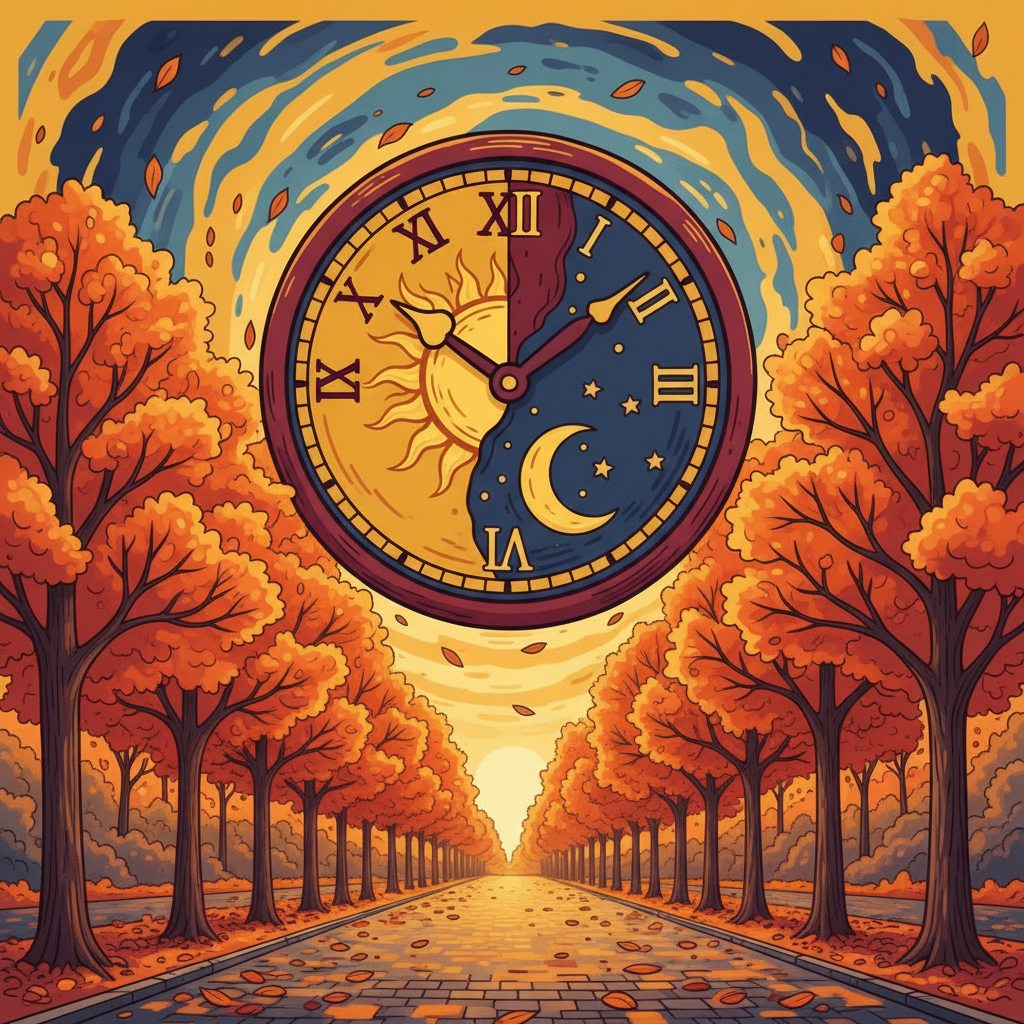
In the early hours of Sunday 25 October 2026, clocks in Hungary were set back from 3 am to 2 am. The hour between 2 and 3 therefore passed twice, and the night was one hour longer. This article explains why it happened today, why clock changes have not been abolished, and what night transport had to handle.
| Fact sheet | |
|---|---|
| Change | Sunday 25 Oct 2026, 3:00 → 2:00 |
| Rule | last Sunday of March and of October (since 2001) |
| Legal basis | Directive 2000/84/EC |
| EU proposal to end it | 12 September 2018 |
| Public consultation | about 4.6 million replies, 84% for ending it |
| European Parliament | 26 March 2019: supports ending it |
| Council of the EU | no final position yet |
| Next change | 28 March 2027 (this article's calculation) |
Sources: European Commission, MÁVINFORM (Hungarian).
Why today
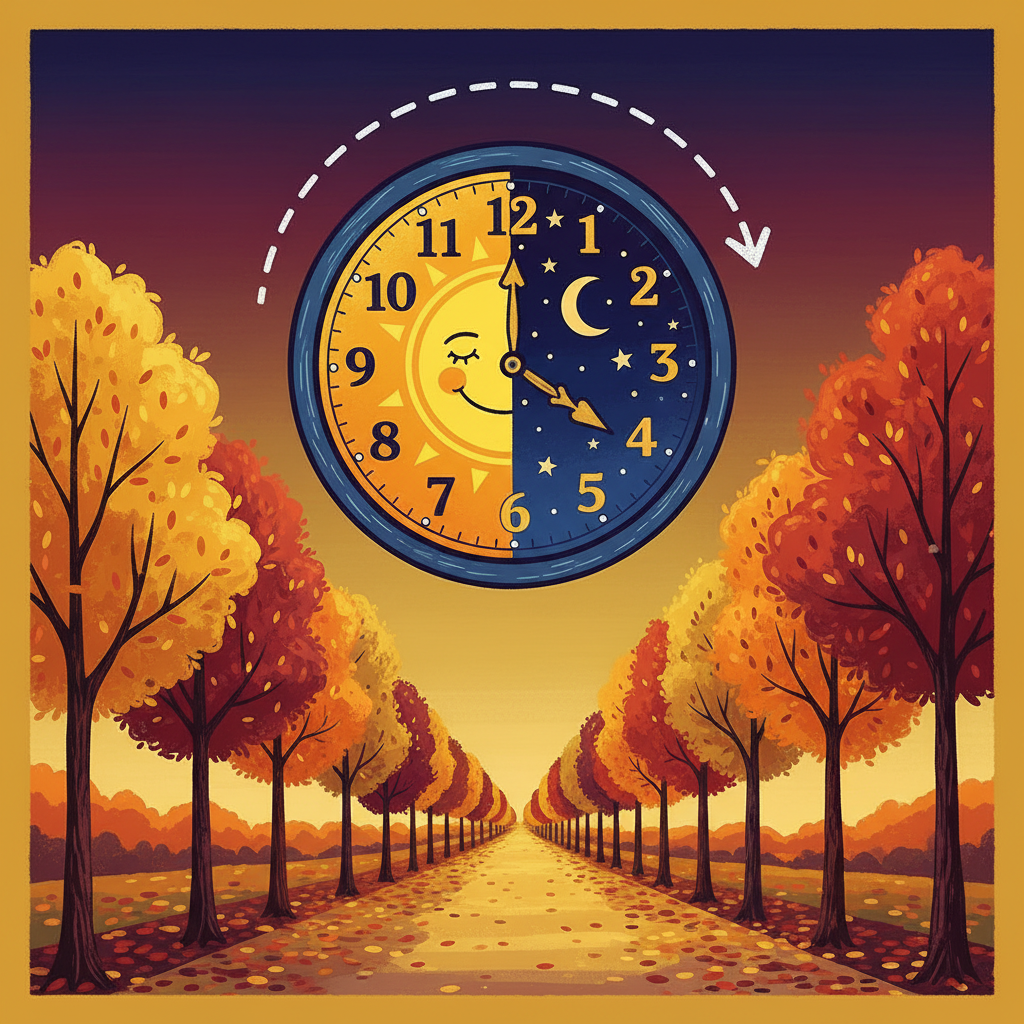
In the European Union the clock change is a common rule. According to the European Commission, Directive 2000/84/EC has required Member States since 2001 to switch to summer time on the last Sunday of March and back to standard (winter) time on the last Sunday of October. In 2026 the last Sunday of October fell on the 25th.
A shared date keeps the single market aligned – in transport, timetables and cross-border business – so that Member States do not drift apart.
What happened to the plan to end it
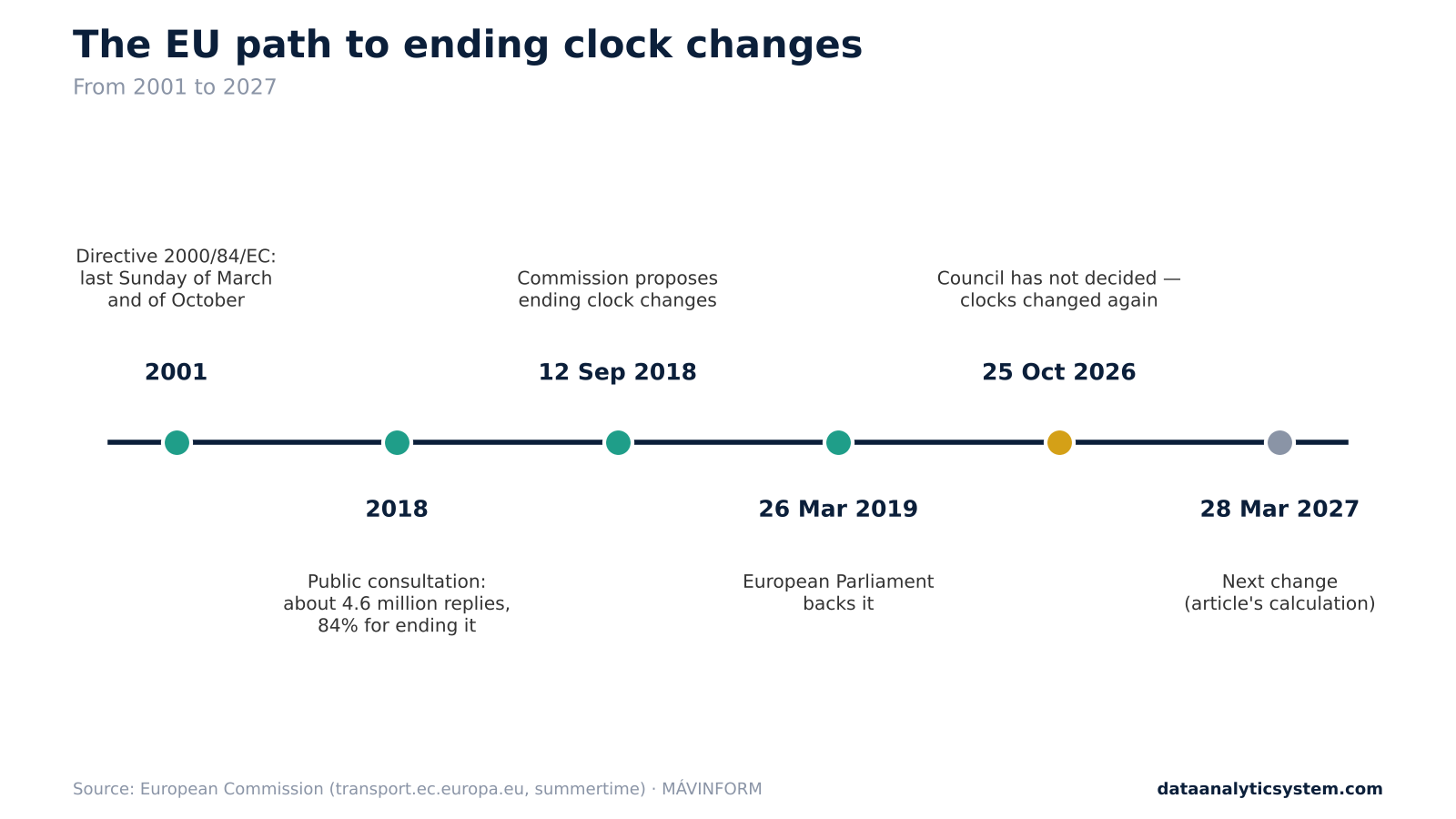
Many people remember that the EU was "abolishing the clock change". According to the Commission's summary, the process went like this:
- 2018: a public consultation drew about 4.6 million replies; 84% wanted to end the twice-yearly change and 16% wanted to keep it.
- 12 September 2018: the Commission proposed ending seasonal clock changes from 2019, letting each Member State choose its permanent time.
- 26 March 2019: the European Parliament adopted its position, aiming to stop the changes by 2021.
- Since then: the Council of the EU, where Member State governments sit, has not finalised its position.
An EU law needs agreement between Parliament and Council. Until that happens, Directive 2000/84/EC stays in force and clocks change twice a year.
Night buses: 2 am, twice
For a timetable, an hour that happens twice is a real question: is a 2:20 departure at the first 2:20 or the second? According to MÁVINFORM, Hungary's state rail and bus operator, times always refer to the clock in use at departure, and some services ran only once:
- the 2:07 departure of route 300 from Budapest-Nyugati to Vác ran once, on summer time;
- route 419 from Örs vezér tere to Csömör left once at 2:20, on summer time;
- route 653 leaving Kunszentmiklós at 2:53 ran once, on winter time, reaching Népliget at 4:20;
- route G506 leaving Debrecen at 2:40 departed only after the change, on winter time.
Local buses in Dunaújváros, Nyíregyháza and Szeged also changed.
Summer time, winter time: the difference
Winter time in Hungary is Central European Time (UTC+1); summer time is one hour ahead (UTC+2). In autumn we therefore "get back" an hour: mornings get light earlier and evenings get dark earlier. In spring the reverse happens, and the night is one hour shorter.
5 things many people don't know
- Parliament has already voted to end it. The European Parliament backed the change on 26 March 2019; the Council's position is missing.
- The proposal did not say which time should stay. Under the Commission's plan, each Member State would choose its permanent time.
- The consultation drew a huge response. About 4.6 million replies came in.
- One bus left at 2:40 only once. Debrecen's route G506 waited for the second 2:40.
- The common rule dates from 2001. Since then the directive has set the two Sundays for every Member State.
Summary
- On 25 October 2026, 3:00 became 2:00 and winter time returned.
- The rule is Directive 2000/84/EC: last Sunday of March and of October.
- The Commission proposed ending it in 2018, Parliament backed it in 2019, the Council has not decided.
- By this article's calculation, the next change is on 28 March 2027.
Related reading: 24 October, United Nations Day · Blog archive.
Educational content. Timetable details come from MÁVINFORM; before travelling, the operator's current information applies. Data Analytic Investments is not affiliated with the EU institutions or the MÁV Group; names are used for identification only. Images labelled "AI illustration" are not photographs.
Continue on DAI
Explore Topics
Written by
Data Analytic Investments
Content creator and writer sharing insights and stories.