Tesla Optimus: where the humanoid robot stands in autumn 2026
From the 2021 announcement to the Fremont line: what Optimus can do, how it is built, how many are being made, what Tesla plans for Giga Texas, and which claims are only reported.
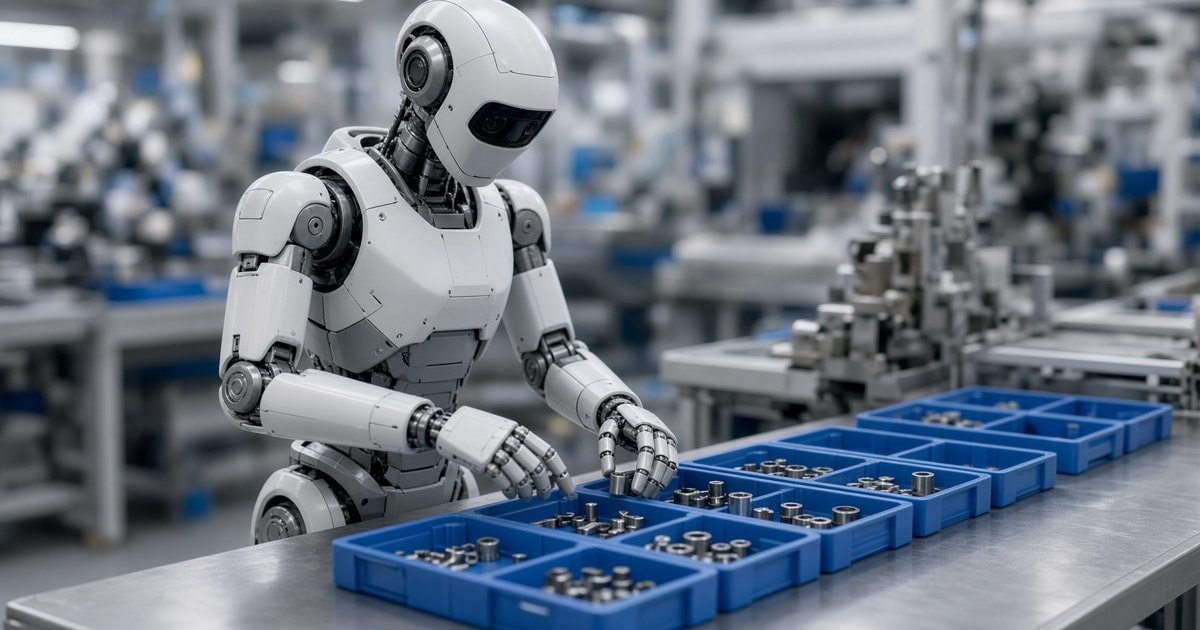
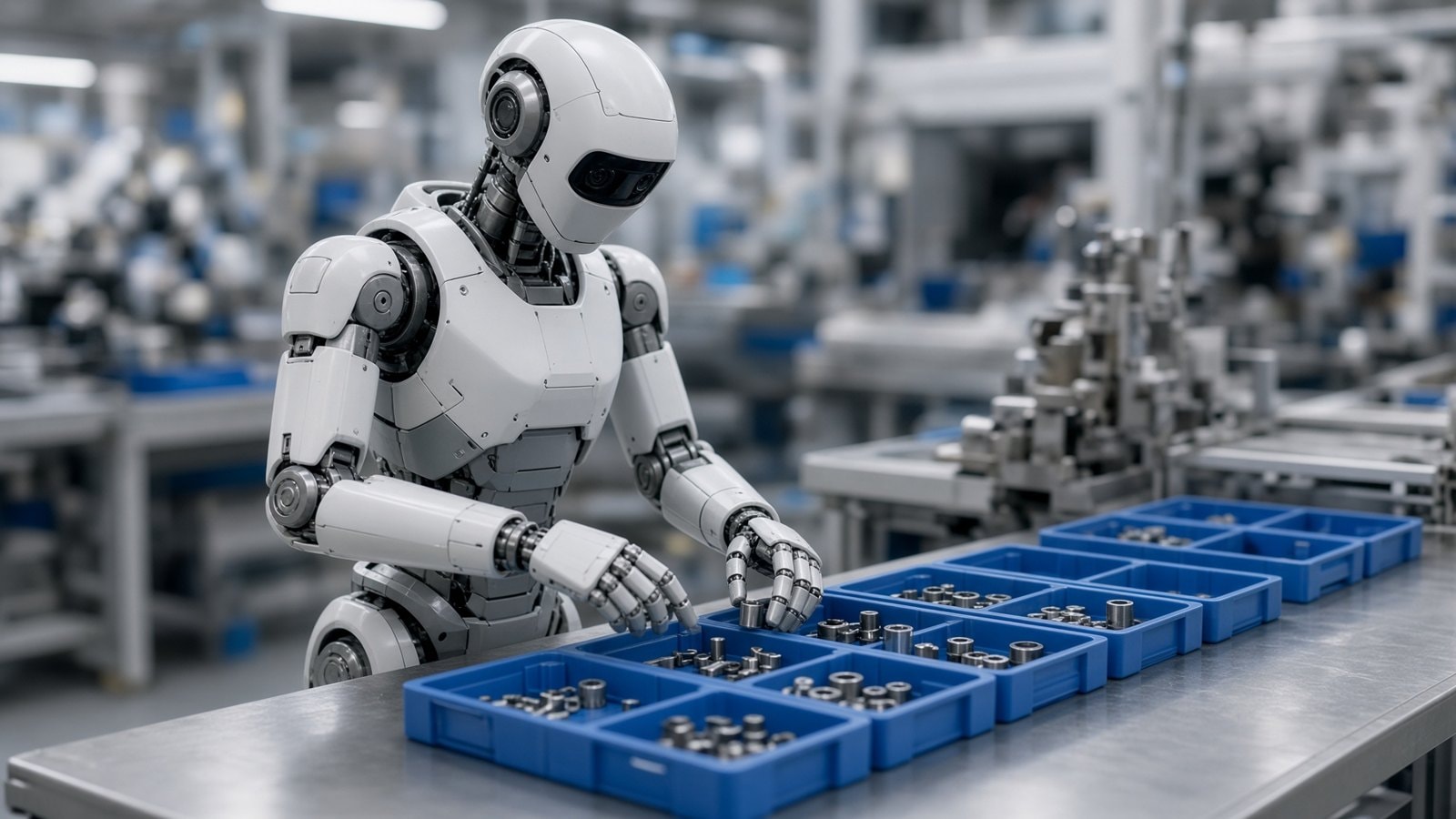
Optimus is Tesla's humanoid robot: a machine with two legs, two arms and two hands, built to do work in spaces designed for people. Five years after it was announced, it is being produced on a converted car line in Fremont. This article collects what is documented about it in October 2026, and marks clearly what is only reported or only promised.
The basic data
According to the Optimus article on Wikipedia, which compiles Tesla's published figures:
| Property | Value |
|---|---|
| Height | 173 cm (5 ft 8 in) |
| Weight | 57 kg (125 lb) |
| Carrying capacity | 20 kg (45 lb) |
| Hand degrees of freedom | 11 (Generation 2, 2023) → 22 (Generation 3, 2024) |
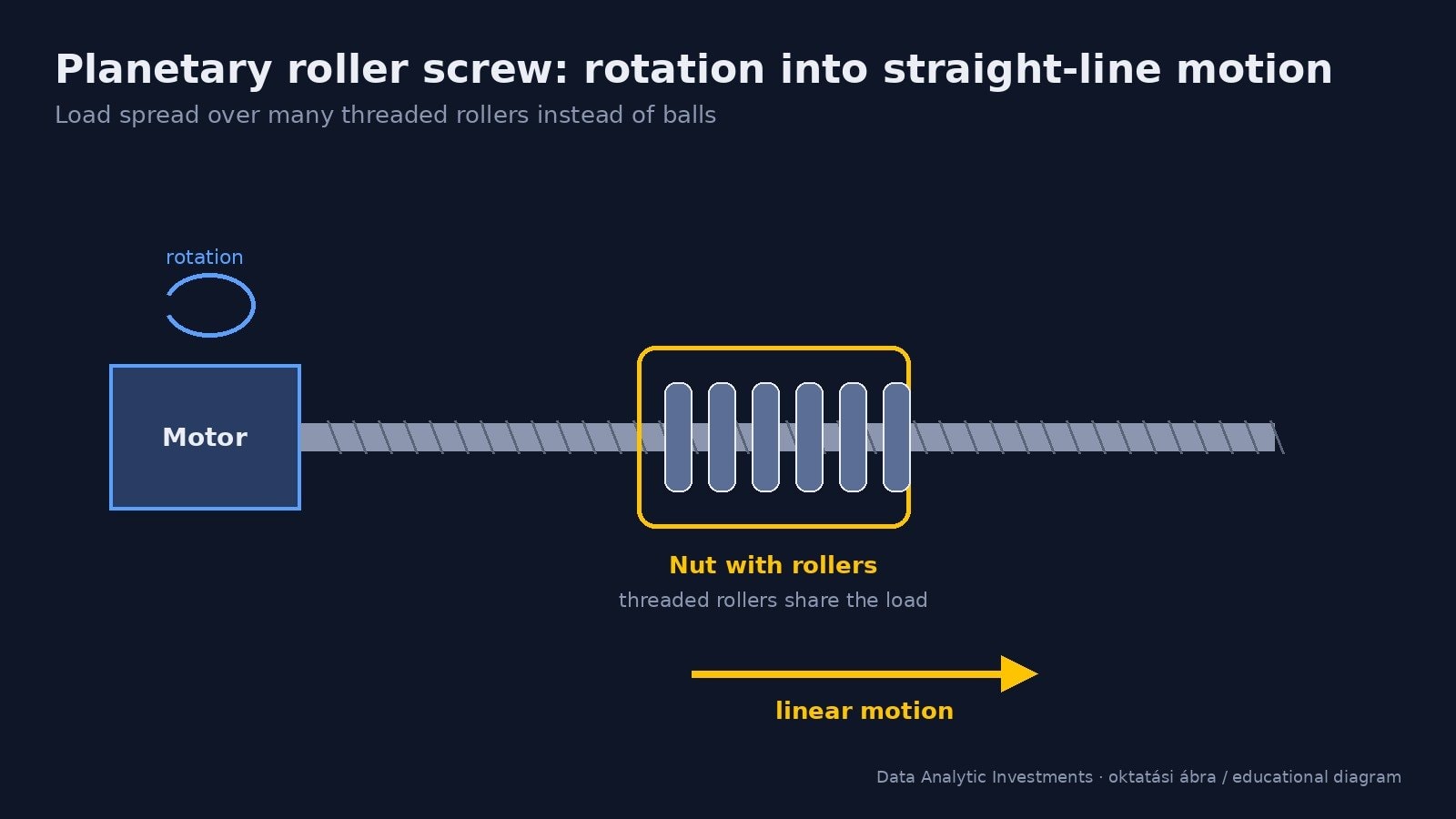
| Actuators | planetary roller screws instead of ball screws |
| Target price mentioned by Musk | about US$30,000 |
Two items in this table deserve a short explanation.
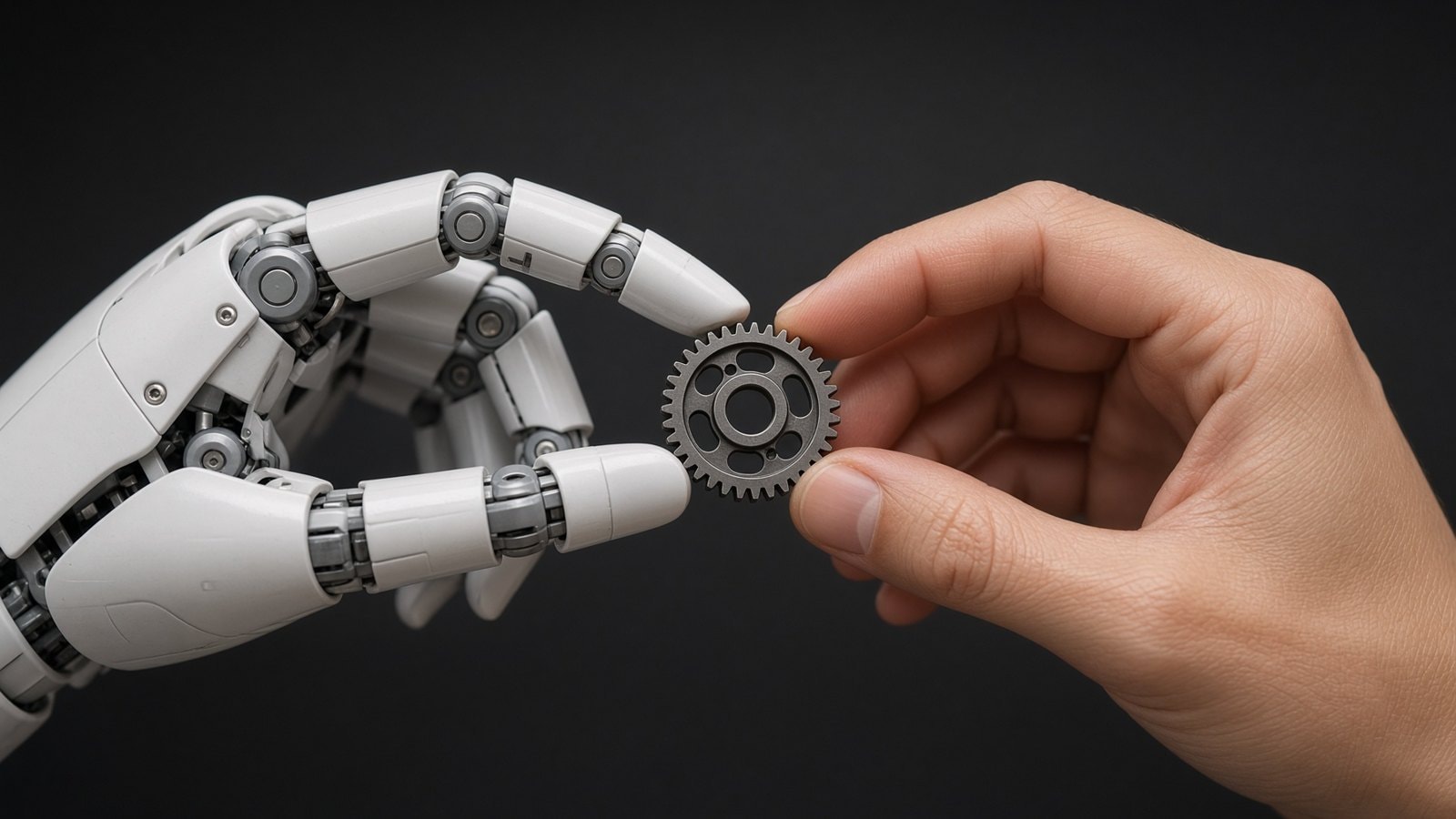
Degrees of freedom count the independent ways a joint system can move. A human hand has a little over twenty. Going from 11 to 22 in the hand is what makes it possible to pick up small, irregular objects instead of only blocks.
Planetary roller screws turn the rotation of a motor into straight-line motion, like a ball screw, but they spread the load over many more contact lines. Tesla chose them for better resistance to the shock loads of walking.
Five years in one timeline
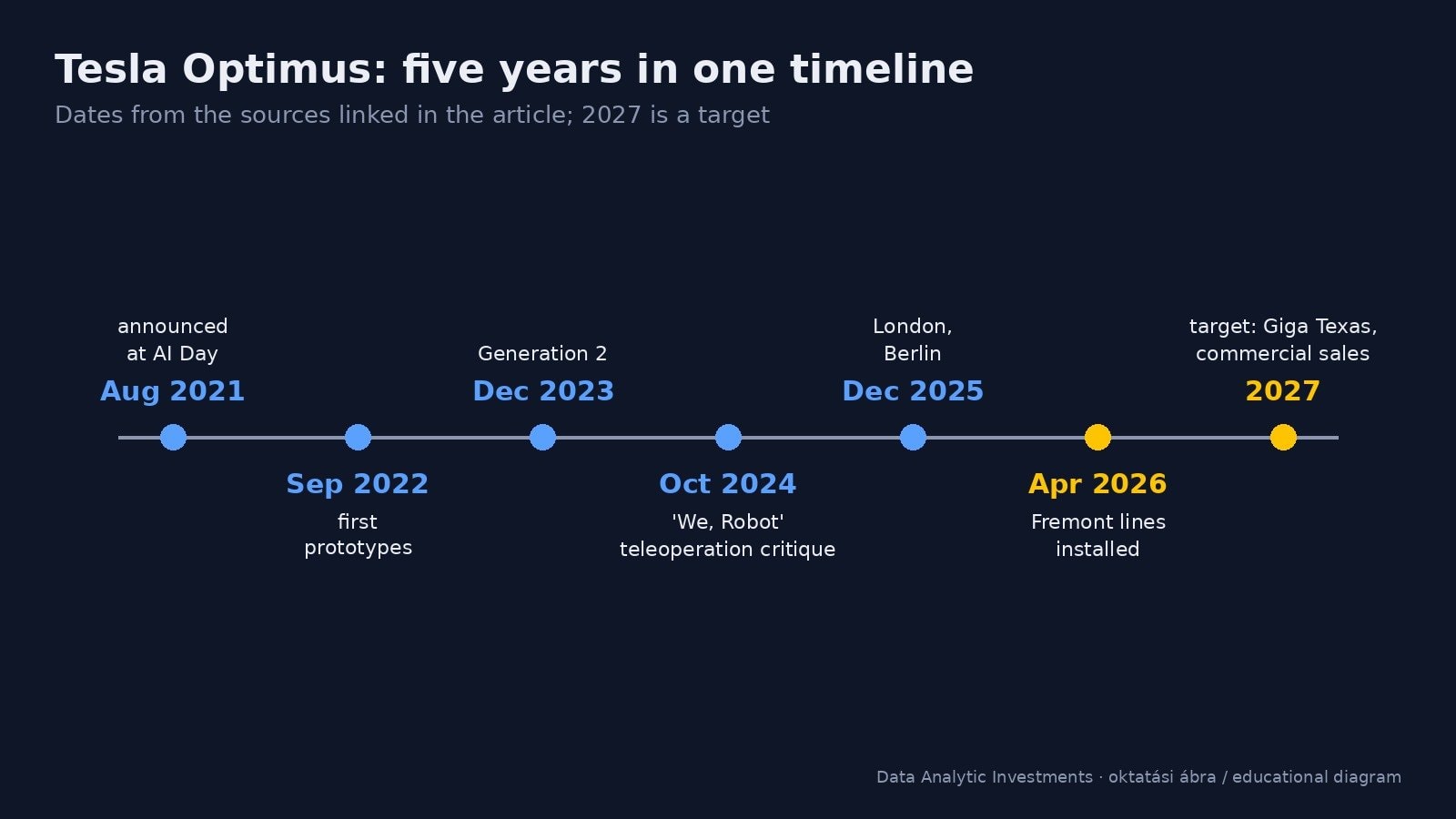
- 19 August 2021 – announced at Tesla AI Day.
- September 2022 – first semi-functional prototypes on stage at the second AI Day: one walks, one moves its arms.
- December 2023 – Generation 2: slimmer body, better hands; a video shows it walking and handling an egg.
- June 2024 – Musk says limited production will start in 2025, with more than 1,000 units for Tesla's own factories.
- October 2024 – at the "We, Robot" event, robots mix with the crowd; critics report that they were mainly remotely operated, and Tesla is criticised for not saying so clearly (Wikipedia).
- June 2025 – programme head Milan Kovac leaves; Ashok Elluswamy takes over.
- December 2025 – first public appearances outside the USA, in London and Berlin.
- 22 April 2026 – Q1 2026 earnings call: production lines being installed in Fremont; Optimus V3 to be shown "closer to production start".
The factories: Fremont and Giga Texas
On the Q1 2026 call, Tesla described two production stages (The Robot Report, 22 April 2026):
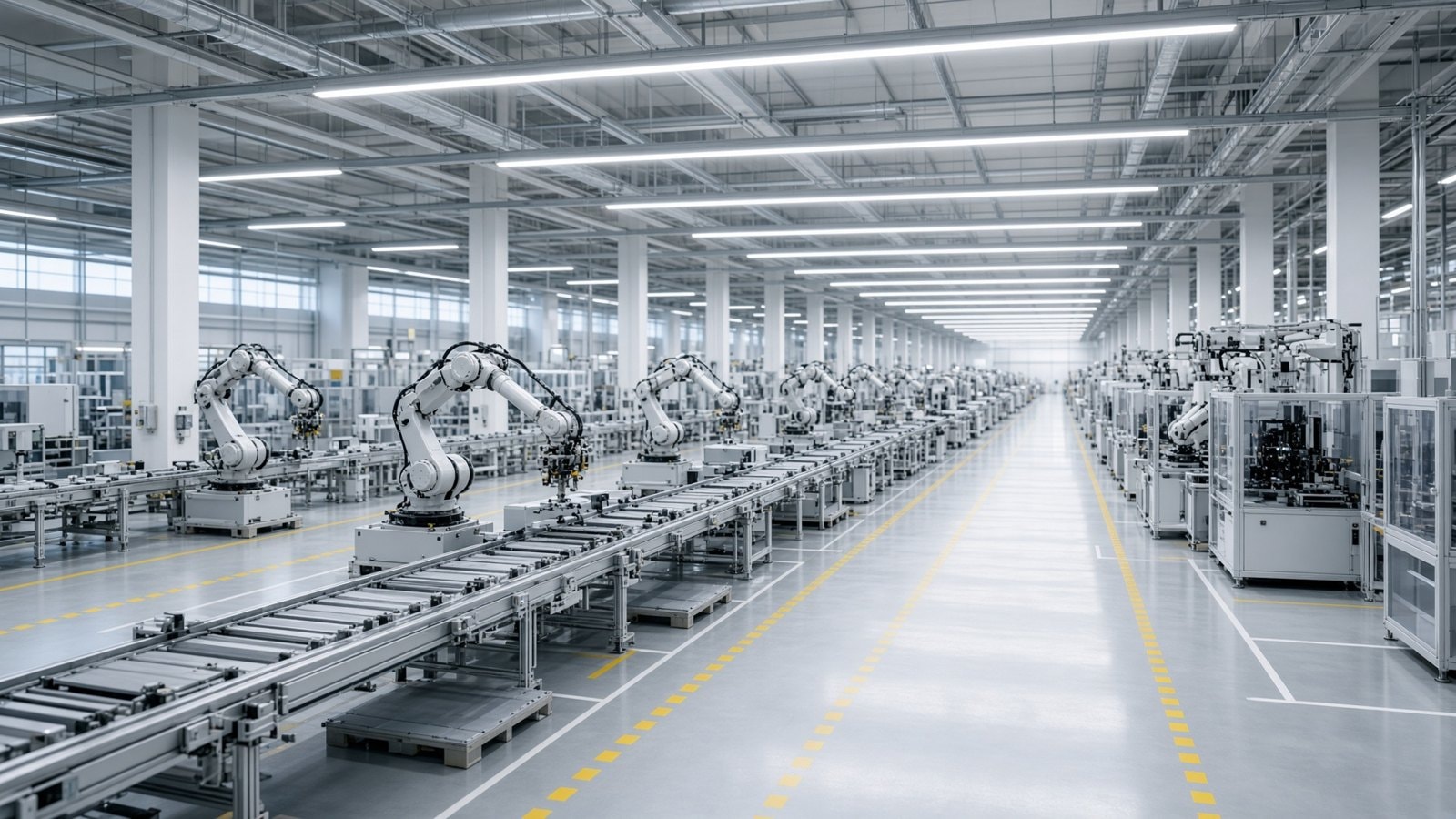
- Fremont, California: a first-generation line designed for 1 million robots a year, built in the space of the former Model S and Model X lines.
- Giga Texas: a second-generation line with a long-term target of 10 million robots a year; site preparation under way.
Musk said converting the Fremont line would take about four months, and called it "an insanely fast speed" (Drive Tesla Canada, 23 April 2026).
How many are being made now?
Here the sources become thinner, and the distinction matters.
- A Tech Insider summary from 19 October 2026 cites a trade report saying Fremont is producing "several hundred" robots per week, roughly ten times the pace of Q2 2026. No exact weekly figure was published by Tesla.
- The same summary reports internal targets of more than 1,000 units per week by the end of 2026, and more than 1,000 robots already working inside Tesla factories on supervised tasks such as sorting battery cells and moving parts. These are reported figures, not company disclosures.
- It also notes that each robot has more than 10,000 unique parts, none of which had been mass-produced before.
A design line worth remembering when reading production targets: in April 2018, after the Model 3 ramp, Musk wrote: "Yes, excessive automation at Tesla was a mistake. To be precise, my mistake. Humans are underrated."
What about Optimus V3?
In April 2026, Musk said V3 could be unveiled as early as mid-2026, and that Tesla was holding back early demonstrations because "competitors will analyze it frame by frame and copy everything we do" (Drive Tesla Canada). The sources reviewed for this article do not document a public V3 reveal as of their publication dates.
The open questions
- Autonomy versus remote operation. The 2024 demonstrations were criticised for relying on teleoperation. How much of today's factory work is fully autonomous is not disclosed in numbers.
- Usefulness. In January 2026, Musk reportedly told investors that the robots were "primarily for learning and data collection rather than performing productive tasks" (second-hand report, quoted by Tech Insider).
- Hardware limits. In 2026 an actuator engineer argued that the platform depends on "torque density breakthroughs", not only on software (Wikipedia).
- Price and availability. The about US$30,000 figure is a target. Commercial availability is targeted for 2027 in the reports cited.
Critics have been sharp from the start: roboticist Rodney Brooks called Musk's vision of humanoid assistants "pure fantasy thinking". Musk, for his part, said in April 2026 that Optimus would be the biggest product Tesla has ever made. Both are statements, not measurements.
Summary
- Documented: 173 cm, 57 kg, 20 kg payload, 22-degree-of-freedom hands, planetary roller screws; a Fremont line designed for 1 million a year; a Giga Texas line planned for 10 million a year.
- Reported, not disclosed: "several hundred" a week in October 2026, more than 1,000 working in Tesla factories.
- Promised: V3 reveal, commercial sales from 2027, a price around US$30,000.
Educational content. Not investment advice. Data Analytic Investments is not affiliated with Tesla, Inc.; brand names are used for identification only. Illustrations marked "AI illustration" are not photographs.
Continue on DAI
Explore Topics
Written by
Data Analytic Investments
Content creator and writer sharing insights and stories.