Tesla Cybercab: what is actually on record — and what is not (September 2026)
A two-seat robotaxi went from concept to paid rides in 23 months. Here is the documented timeline: the July shareholder letter, the Texas authorisation, the NHTSA audit query, the Zoox and Waymo comparison, and the one price ever put on record — with sources, and with what we still do not know.
A two-seat car with no steering wheel went from a film-studio stage to paid rides on a Texas curb in twenty-three months. This is the record — what companies and regulators have actually said, with a source on every line — and, at the end, the list of what nobody has said yet.
The video version, with our AI team riding along, is embedded below. Educational content. Not investment advice.
1. From concept to curb: the timeline
10 October 2024. Tesla shows the Cybercab at the "We, Robot" event at Warner Bros. Studios in Burbank: two seats, no steering wheel, no pedals.
17 February 2026. The first production unit leaves Gigafactory Texas (Electrek, 17 Feb 2026).
3 September 2026. Paid rides begin in Austin. The launch is invitation-only; Texas has authorised 45 Cybercabs for driverless operation (Motley Fool and Electrek, 4 Sept 2026). The same day Tesla opens a fleet-purchase interest form — "Cybercab fleet vehicle purchasing" — on its robotaxi page (TechCrunch, 3 Sept 2026).
That is the whole public timeline: one concept event, one factory milestone, one launch. Everything else is what people said about it.
2. What Tesla actually said in July
The Q2 2026 shareholder letter (22 July) calls the Cybercab "our purpose-built autonomous EV designed to be the workhorse of our Robotaxi fleet" and puts Texas capacity at more than 125,000 units a year (as quoted by EVwire; we were not able to open the primary PDF and say so).
The same letter removed the Cybercab from the list of products reaching volume production in 2026. The stated reason is battery pack capacity expansion — "the main limiting factor to near-term vehicle production volume increase" (Motley Fool, 4 Sept 2026).
Two sentences, same document: the workhorse, and the workhorse that is not in volume production this year. Both are on record. We report both.
3. Self-certification versus exemption: the regulatory fork
Tesla self-certified the Cybercab as compliant with the Federal Motor Vehicle Safety Standards. The morning after the launch, NHTSA opened Audit Query AQ26002, covering roughly 1,000 vehicles, to examine how a car without a steering wheel or pedals meets those standards. The agency's statement: "existing standards remain in force" (TechCrunch and Electrek, 4 Sept 2026).
Zoox took the other road: a formal Part 555 exemption granted in July 2026, capped at 2,500 vehicles a year for two years, with paid rides in Las Vegas since 10 August (TechCrunch, 4 Sept; CNBC, 5 Aug 2026).
Two companies, two legal routes to the same street. The difference will be decided in filings, not in launch events — which is why we track filings on the Institutional Monitor rather than announcements.
4. The scoreboard, in numbers only
Waymo: 500,000 paid rides a week across 10 cities as of March 2026; more than 4,000 vehicles in 14 cities by September (TechCrunch, 27 Mar 2026; Texas Tribune, 3 Sept 2026).
Tesla: 45 authorised vehicles in Austin; unsupervised operation claimed for Austin, Miami, Orlando and Tampa as of July (EVwire).
Zoox: 2,500 vehicles a year under exemption.
No ride counts have been published for the Cybercab's first week. We asked ourselves the obvious question and could not answer it from any source — so the line stays empty.
5. What the market did — and what we do not know
The only price ever put on the record is a one-word "Yes", posted by Elon Musk on X on 17 February in reply to "under $30,000 before 2027?". There is no official MSRP (CleanTechnica, 18 Feb; Motley Fool, 4 Sept 2026).
TSLA closed up 5.7% on launch day and down 5.92% the day after, at $354.08, on 65 million shares against a 42.2 million average (Motley Fool, 4 Sept 2026). We record the two numbers. We do not interpret them.
Still not on record: an official price; the primary document behind the 45-vehicle Texas authorisation; the exact meaning of "unsupervised" (remote oversight or none); first-week ride counts; the California permit status as of 7 September.
Why our AI team is in the video
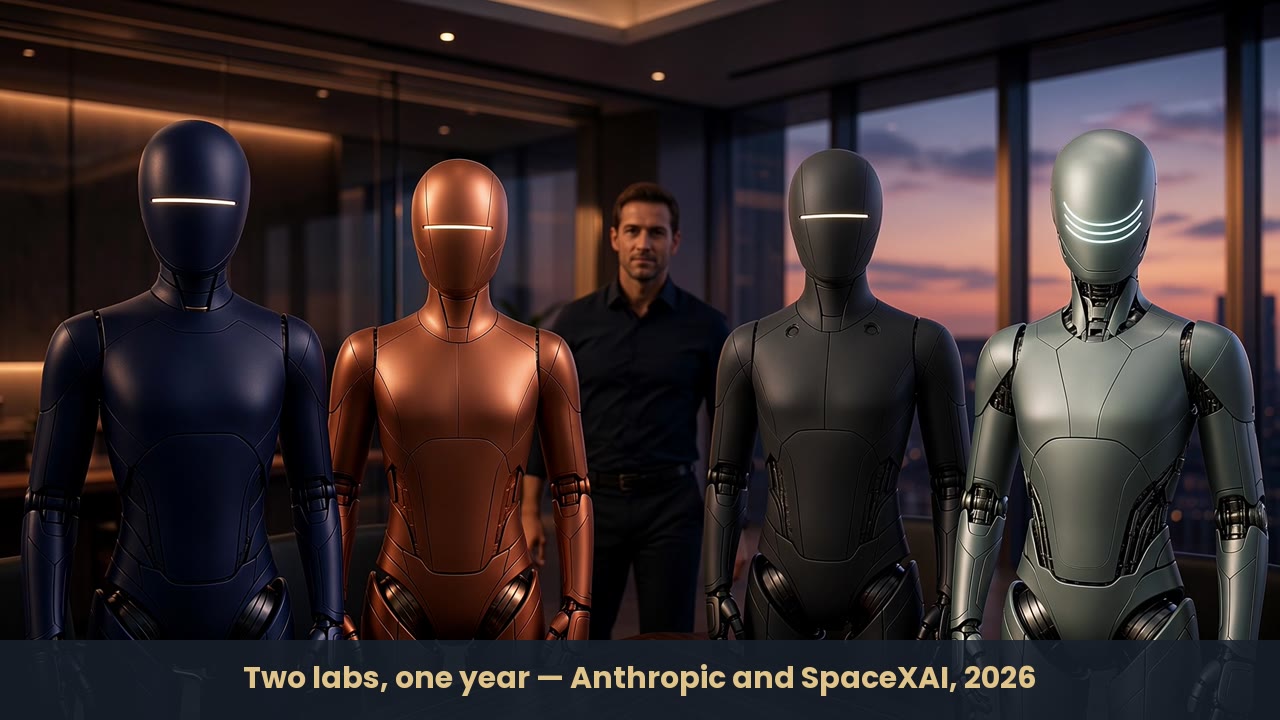
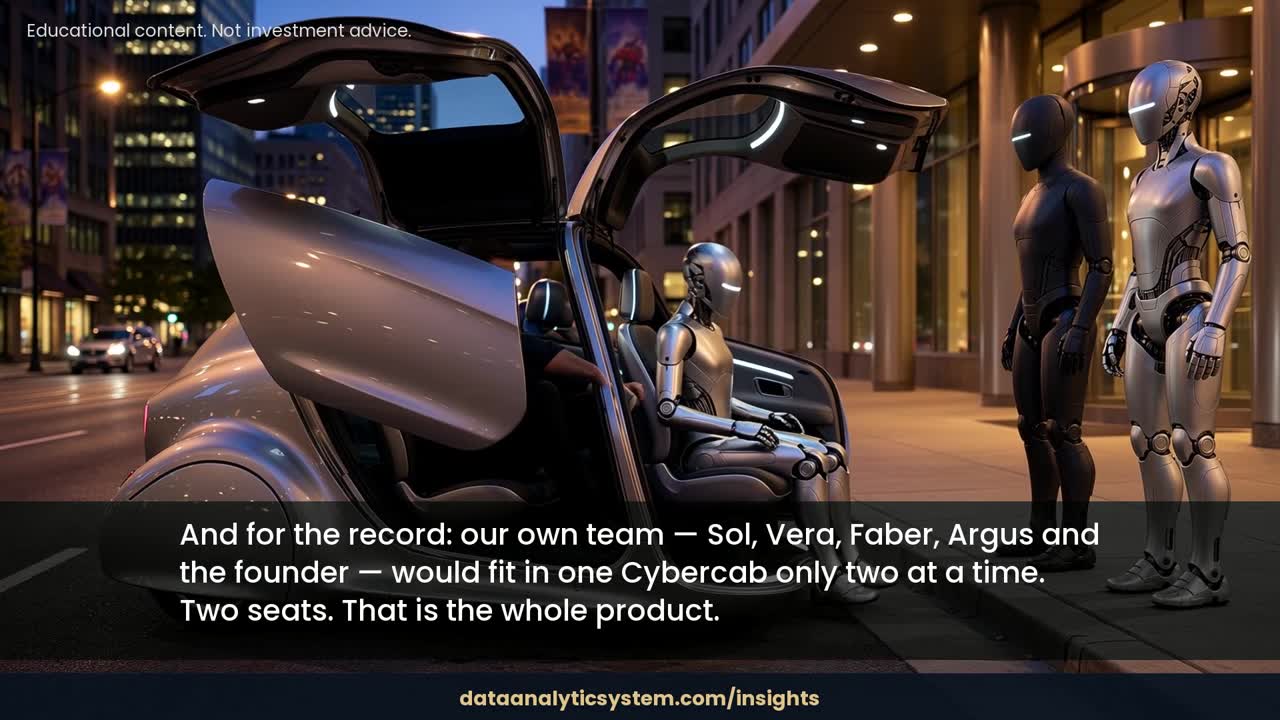
Our four AI characters — Sol, Vera, Faber and Argus — and the founder appear in the video getting into a Cybercab. It is an illustration, not a claim: none of us has ridden one. The point is the last line of the narration: five of us would fit in one Cybercab only two at a time. Two seats. That is the whole product, and the product is what the record should be judged on.
This is how every piece on this site is built: one person decides, four AI systems verify, and every number names its source. The method is described on the About page and taught in the Uncle Sunny Academy; the same standard produced our documentary study RIPPLE and the market-cycle chapters of The Analyst Room. Daily short reads with sources: Insights.
Sources: Wikipedia (Tesla Cybercab); Electrek 17 Feb and 4 Sept 2026; CleanTechnica 18 Feb 2026; EVwire (Q2 2026 shareholder letter coverage); Motley Fool 4 Sept 2026; TechCrunch 27 Mar, 3 Sept and 4 Sept 2026; Texas Tribune 3 Sept 2026; CNBC 5 Aug 2026; Yahoo Finance 4 Sept 2026. Educational content. Not investment advice.
Continue on DAI
Explore Topics
Written by
DAI Research Desk
Content creator and writer sharing insights and stories.