DeepMind Published a Score for Every Possible Single-Letter Change in Human DNA — What the AlphaGenome Atlas Is, and What It Is Not
On 8 September 2026 Google DeepMind released the AlphaGenome Atlas: predictions for roughly nine billion possible single-letter mutations in the human genome, a one-petabyte dataset, free for non-commercial research. Here is what the company's own post says, what independent scientists said to Nature, and where the limits are.

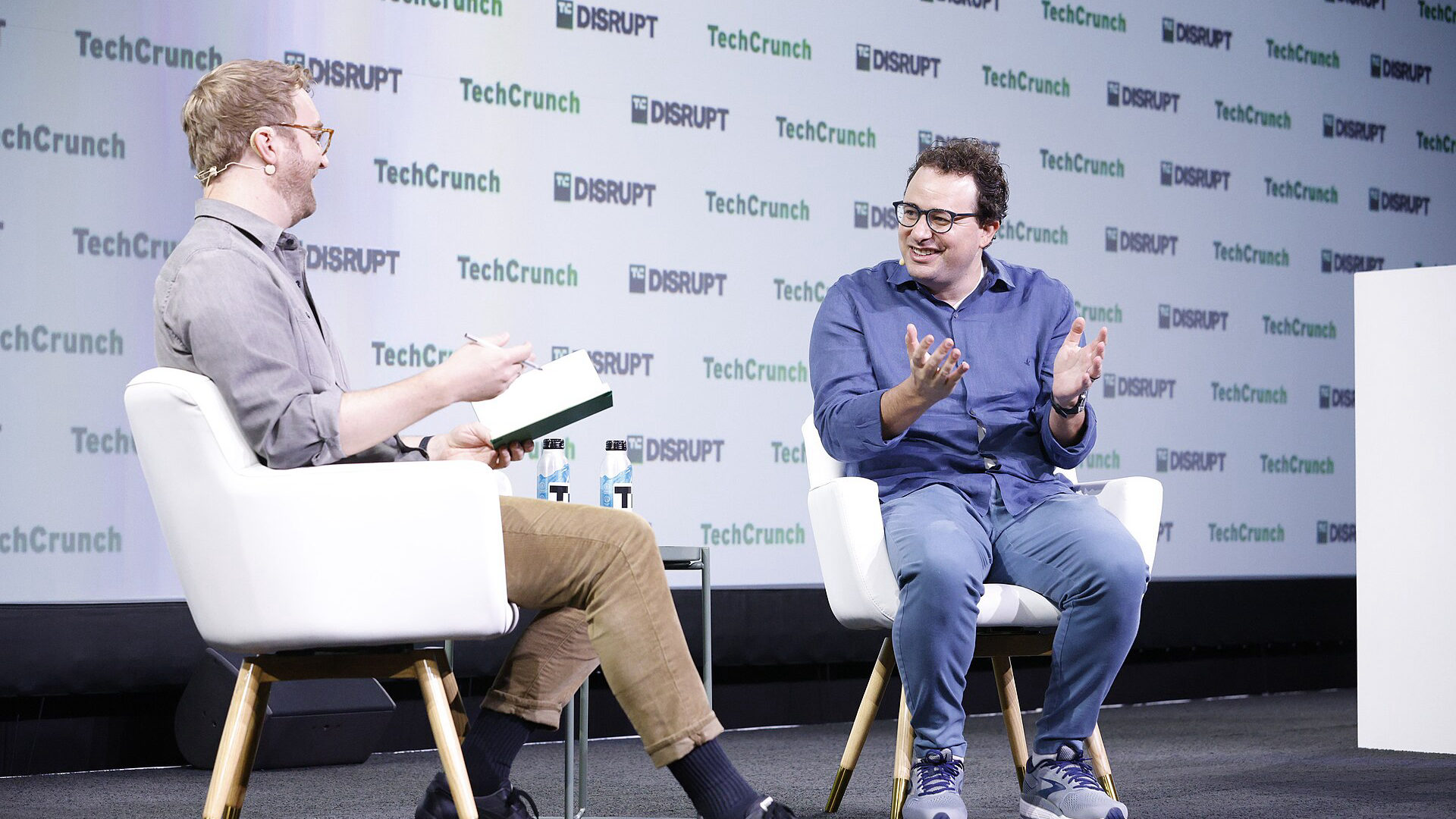
Photo: Demis Hassabis, chief executive of Google DeepMind, at the 2024 Nobel Prize ceremonies in Stockholm, where he was a laureate in chemistry. Photo: John Sears, CC BY-SA 4.0 (Wikimedia Commons).
The human genome is about three billion letters long, and only around two percent of it codes for proteins. The rest — the non-coding part — regulates when and where genes are switched on, and for two decades it has been the part that geneticists could read but not interpret. On 8 September 2026, Google DeepMind published a tool that claims to help with exactly that: the AlphaGenome Atlas, a precomputed prediction for every possible single-letter change in human DNA.
This article does what our About page says we do with any announcement: it separates what the primary source says from what is being said about it. The primary source here is DeepMind's own blog post of 8 September. The independent voices come from a news report in Nature published the same week.
What was released
According to DeepMind's post, the Atlas contains predictions for roughly 9 billion single-nucleotide variants — "every single-letter change possible" in the human genome — plus scores for more than 100 million small insertions and deletions, and a map of over 2,500 recurrent DNA sequences that the post calls "the 'words' of the genome". The dataset is described as "a massive 1-petabyte dataset, more than 30 times larger than" the AlphaFold Database, DeepMind's earlier release of protein-structure predictions.
The reasoning for precomputing everything is stated in one sentence: "With roughly 9 billion possible single-letter mutations in the human genome, testing each one in the lab is practically impossible."
The Atlas combines the outputs of two earlier DeepMind models — AlphaGenome, which predicts the regulatory effect of DNA sequence, and AlphaMissense, which scores protein-altering variants — into a single number per variant that DeepMind calls the AVI score, for AlphaGenome Variant Impact. The company says the Atlas is available "for non-commercial use through our website from today, as well as for commercial use on Google Cloud soon".
What researchers have already done with it
DeepMind's post lists early uses by outside groups, and these are the most concrete claims in the release.
Laura Covill and Anne O'Donnell-Luria of the Broad Institute, the post says, "used the AVI score to prioritize variants, driving a rare disease, that were overlooked in previous research", and "discovered a variant affecting a gene called DNM1, which is strongly linked to epileptic encephalopathy".
Gareth Hawkes of the University of Exeter, according to the post, applied the Atlas to whole-genome data from more than 54,000 UK Biobank participants and uncovered 22 percent more non-coding genetic associations than without it. In a separate analysis of body-mass index, focusing on the one percent of non-coding variants that the Atlas ranks as most impactful, his team "identified 19 genetic regions".
Julia Zeitlinger and Melanie Weilert of the Stowers Institute used the Atlas to sort transcription factors — the proteins that bind DNA — into those that only change how accessible a stretch of DNA is and those that also switch genes on or off. Zeitlinger described the tool to Nature as a "searchable dictionary for non-coding DNA".
What independent scientists said
Nature's news report quotes Martin Kircher of the Max Delbrück Centre in Berlin: "This is a useful and generous way to scale up access to a strong model." The same report records his caution that predictions of this kind do not replace experiments or the case-by-case judgement of a diagnostic team.
Nature also notes the practical reason the Atlas matters: the underlying AlphaGenome model had been available through a programming interface, used by roughly 9,000 researchers, but using it required code — which limited access for the biologists most likely to need it. A precomputed table removes that barrier.
Pushmeet Kohli, DeepMind's vice-president of research, put the twenty-year gap this way in an interview with Fortune, referring to the Human Genome Project of 2003: "we bought the book, but we did not understand how to read it".
What DeepMind says it is not
The post carries its own limits, and a documentary account should quote them rather than soften them. DeepMind writes: "The information provided by AlphaGenome Atlas is not intended to be a substitute for professional medical advice, diagnosis, or treatment, and does not constitute medical or other professional advice." The company states that the model has not been validated or approved for clinical use.
There are also things we could not verify. A figure circulating in secondary coverage — that the AVI score ranks the true disease-causing variant among the top 50 candidates in 29.5 percent of clinical cases versus 12.5 percent for an established method — does not appear in DeepMind's post as we read it, and we have not read the accompanying technical paper, so we do not repeat it as fact. We have not opened the Atlas portal ourselves. And the early results above are the company's account of its collaborators' work, not peer-reviewed publications.
Why this matters for a reader of a data site
Readers of our Insights section will recognise the pattern, because it is the pattern this site is built on: a model is only useful when its output is published as data that other people can check. AlphaGenome Atlas is a prediction table with a stated method, a stated scope, a stated disclaimer and open access for researchers. That is the same standard we hold ourselves to on the Market Observation pages — sourced numbers, the method next to them, and the limits written down — and it is why we file a genomics release under documentary study rather than under hype. Whether the predictions are right is a question that laboratories will answer over years. What is on the record as of 10 September 2026 is what the Atlas contains, who has used it, and what its makers say it cannot do.
Sources: Google DeepMind blog, "AlphaGenome Atlas: a predictive map of every possible DNA letter change in the human genome" (8 September 2026); Nature news report by Ewen Callaway (September 2026); Fortune (8 September 2026), interview with Pushmeet Kohli. Quotes are reproduced verbatim from the cited sources.
Educational content. Not investment advice.
Continue on DAI
Explore Topics
Written by
DAI Research Desk
Content creator and writer sharing insights and stories.