Strategy's 8-K and the First Two ETF Days After Labor Day: The Institutional Week in Numbers
On 8 September 2026 the largest corporate bitcoin holder told the SEC it had bought nothing for a week and spent $176.3 million buying back its own preferred stock. The same two days, US spot bitcoin ETFs recorded net outflows. Here are the figures from the filing and the flow tables, with every gap marked.
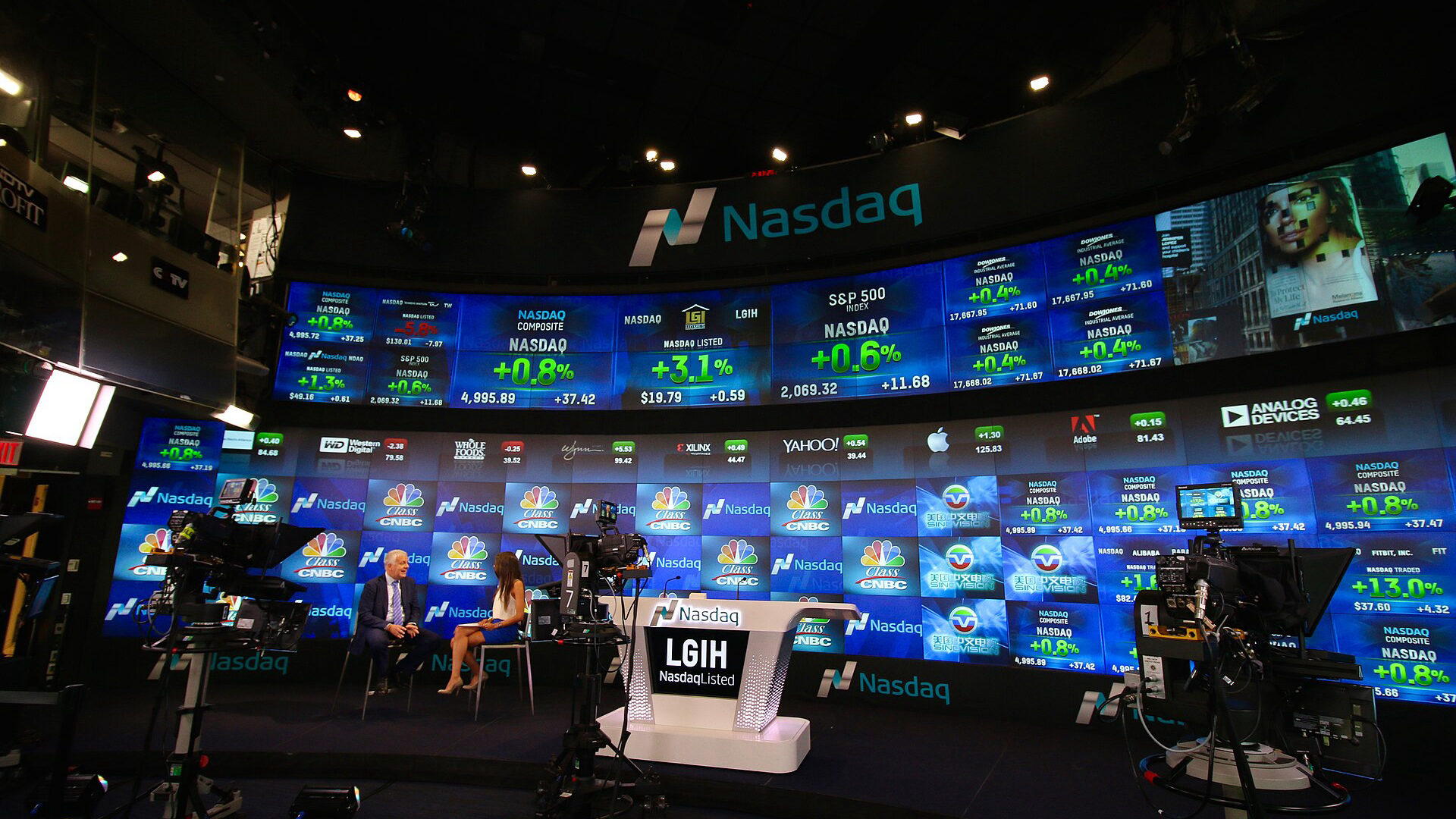
Photo: the Nasdaq MarketSite at Times Square, New York — Strategy's shares trade on Nasdaq. Photo: Luca Marfè, CC BY 2.0 (Wikimedia Commons).
Public companies that hold bitcoin have to tell the market what they did with it, and exchange-traded funds that hold bitcoin publish their creations and redemptions every trading day. Together, these two disclosures are the closest thing the sector has to an institutional ledger. This article reads that ledger for the two days after the US Labor Day holiday, 8 and 9 September 2026, from the primary documents — and says plainly where the numbers are not yet complete.
The filing: Strategy, 8-K of 8 September 2026
Strategy (formerly MicroStrategy, Nasdaq: MSTR) filed a Form 8-K with the US Securities and Exchange Commission on Monday, 8 September 2026, covering the week from 31 August to 7 September. The filing states, verbatim: "Strategy did not sell any shares under its at-the-market offering program and did not purchase or sell any bitcoin."
What the company did do in that week was buy back its own paper. The 8-K reports the repurchase of 1,810,885 shares of its STRC perpetual preferred stock for $176.3 million. Its bitcoin position is therefore unchanged: 845,050 BTC, acquired for an aggregate purchase price of $63.73 billion according to the filing.
Two figures that are not in the 8-K but were reported by The Block on the same day, citing the company's disclosures: a "USD Reserve" of $5.1 billion and cash of $1.44 billion as of 7 September. We list them as press-reported, not as filing text.
For readers who follow our Institutional Monitor, this is the datapoint that matters: the largest corporate holder of bitcoin spent a week using its cash to reduce its preferred-stock liabilities rather than to add coins. That is a fact about one week. The filing says nothing about the next one, and neither do we.
The flows: US spot bitcoin ETFs, 8 September
The daily flow table published by Farside Investors, which aggregates creations and redemptions across the US spot bitcoin ETFs, shows a net outflow of $46.6 million on Monday, 8 September — the first trading day after Labor Day.
The fund-by-fund picture (US$ millions, as displayed by Farside): IBIT (BlackRock) +10.7; FBTC (Fidelity) −17.1; BITB (Bitwise) +14.5; ARKB (ARK/21Shares) +8.1; BTCO (Invesco) −4.7; MSBT +7.4; GBTC (Grayscale) −65.5; EZBC, BRRR, HODL, BTCW and BTC at 0.0.
Read that way, the day is not a broad withdrawal. Four funds took money in, and the net negative number is produced almost entirely by a single fund, GBTC, whose −$65.5 million outweighs the rest. SoSoValue's independent tally, as reported by Bitcoin.com on 9 September, gives a matching net figure of −$46.65 million with GBTC at −$65.51 million.
The flows: 9 September — a partial row
The Farside row for Tuesday, 9 September, as retrieved by us at about 02:00 UTC on 10 September, shows ARKB −78.0, GBTC −27.2, MSBT +4.5 and a net of −$100.7 million — but the IBIT column, the largest fund in the group, was still blank at that time. The row is therefore partial, and the net figure may change once IBIT reports. We publish it because it is what the table showed when we looked, and we mark it so that nobody quotes it as final.
A side note on XRP funds
Bitcoin.com, citing SoSoValue, reported that on 8 September the US XRP exchange-traded funds were the only crypto-fund category with a net inflow: +$1.55 million, all of it in Franklin's XRPZ, against −$46.65 million for bitcoin funds, −$24.29 million for ether funds and −$0.67 million for solana funds. We could not verify the XRP figure against a primary source — Farside's XRP page was not available to us and Franklin's fund page was not checked — so it stands as a single-source press figure.
It is also small. One and a half million dollars of inflow on a day when bitcoin funds moved forty-six million dollars out is a difference in sign, not in scale, and it would be a mistake to read a trend into one Tuesday. Readers of our documentary account of Ripple and XRP will know that the XRP story has always been decided in filings and courtrooms rather than in daily flow tables.
What we do not know
We have not read the ETF issuers' own daily disclosures; Farside and SoSoValue are aggregators, and we relied on them agreeing with each other for 8 September. The 9 September net figure is incomplete. The Strategy "USD Reserve" and cash figures come from press reports, not from the 8-K text we read. And nothing in any of these documents says why the flows were what they were — the filings report actions, not motives.
Why this matters for a market-data reader
The Market Observation pages on this site show what prices did. Filings and flow tables show what the largest holders did, which is a different and often more useful question for someone studying the market. Two things are on the record for 8–9 September 2026: the largest corporate holder stood still and bought back preferred stock, and the largest pool of ETF money recorded net redemptions concentrated in one fund. That is the institutional week in numbers, as of 10 September 2026, with the 9 September row still open.
Sources: Strategy Form 8-K for the period ending 31 August 2026, filed 8 September 2026 (SEC EDGAR, document mstr-20260831.htm); The Block (8 Sept 2026); Farside Investors bitcoin ETF flow table (retrieved 10 Sept 2026, ~02:00 UTC); Bitcoin.com, "Grayscale drives $47M bitcoin outflows as XRP funds gain $1.55M" (9 Sept 2026), citing SoSoValue. Quotes are reproduced verbatim from the cited filing.
Educational content. Not investment advice.
Continue on DAI
Explore Topics
Written by
DAI Research Desk
Content creator and writer sharing insights and stories.